







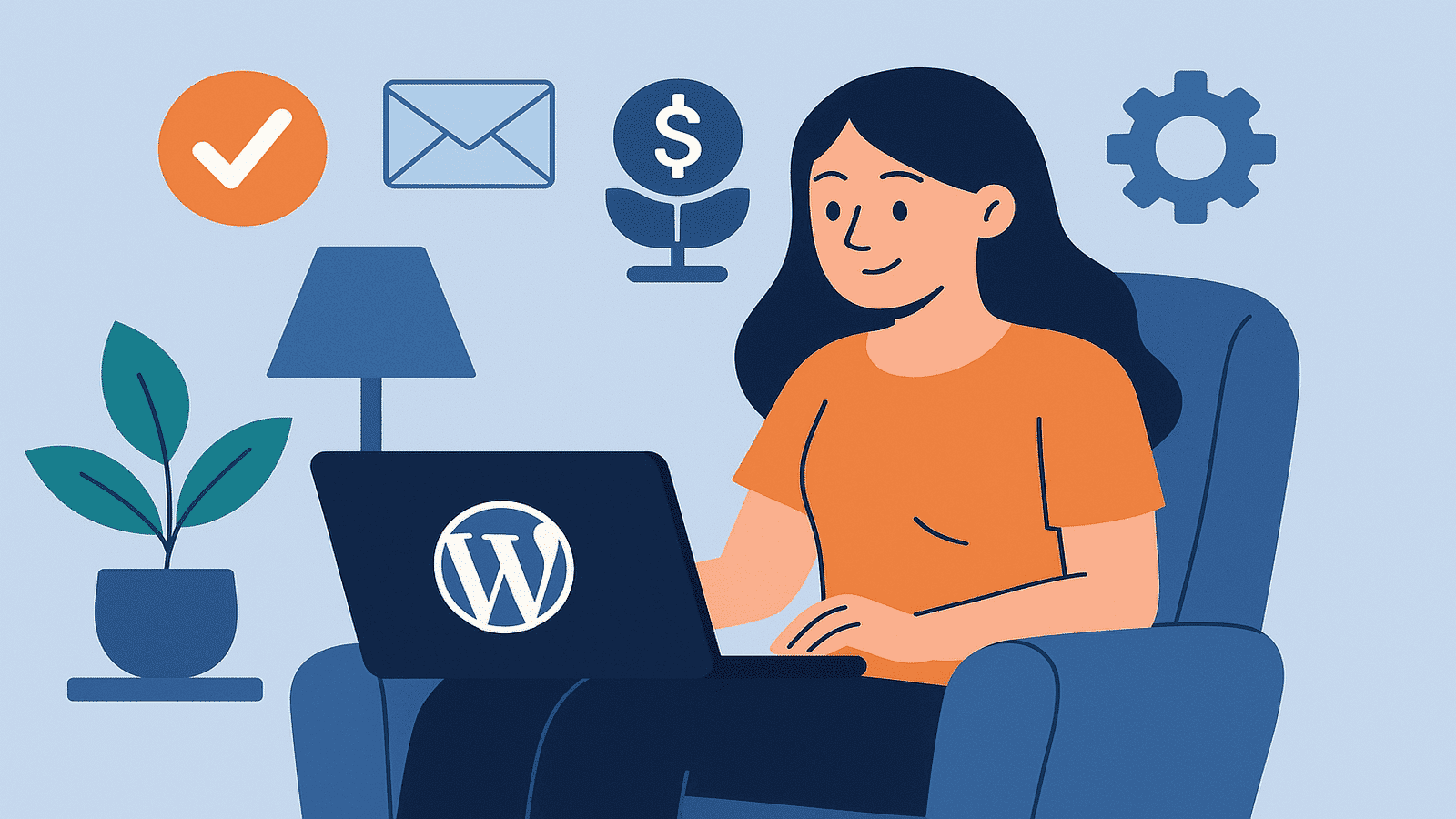
WordPress and Freelancing
Introduction to WordPress
WordPress is one of the most popular content management systems (CMS) worldwide. Launched in 2003 as a blogging tool, it has evolved over the years into a full-fledged option that lets individuals and companies build fully functional websites. Thanks to its flexibility and ease of use, WordPress has become the preferred system for millions of users—from beginners to professional developers.

Its popularity is owed to a wide range of available themes and plugins that enable extensive customization without advanced coding knowledge. In addition, the platform offers search engine optimization (SEO) options that help increase visibility in search results. These traits are among the main factors behind the success of WordPress-powered sites.
WordPress has radically changed how professionals work in web design. Instead of relying solely on traditional programming, designers can focus on creative aspects and user experience, leading to innovative designs that meet audience needs. WordPress covers varied use cases—from personal blogs to commercial sites—making it an effective tool that supports freelancing. In light of these developments, WordPress stands out as an indispensable tool for designers and developers who want to build interactive, engaging websites.
Freelancing: Concept and Importance
WordPress and freelancing
Freelancing refers to professional activities carried out independently, where individuals provide services or products to clients without being tied to a permanent job or single organization. It’s an attractive option for many due to the high degree of flexibility in time and location, suiting those who seek a better work–life balance.
Its importance shows in several advantages. Chief among them is the ability to monetize personal skills in creative ways, as freelancers can apply their knowledge and experience across design, programming, writing, and marketing. Freelancing is growing rapidly, giving many people the chance to earn extra income—or even rely on it as a main source of livelihood.
Building a strong résumé is a key pillar of success in freelancing. Professionals need to present themselves in a polished way that appeals to potential clients. This includes showcasing past projects and acquired skills, and ideally featuring positive reviews from previous clients to reflect work quality. In a highly competitive digital world, a professional résumé operates as an effective marketing tool. By investing time and skills in crafting a distinctive professional identity, individuals can boost their chances of landing new projects and achieving sustained success.
How to Combine WordPress with Freelancing
WordPress is a powerful tool for independent professionals, offering capabilities that enhance their online presence and help achieve career goals. Users can create personal websites that highlight their skills and experience, making it easier for prospective clients to assess their capabilities. Through a professional, uniquely branded site, writers, designers, and developers can reach a wider audience.
To use WordPress as an effective freelancing platform, individuals should clearly define their target market. This requires careful research to understand client needs and pain points, making it easier to offer services that fit those requirements. For example, designers can create compelling visual identities for brands targeting emerging markets, while writers can focus on content that builds brand awareness.
E-commerce is another avenue on WordPress—ideal for professionals who want to sell products or services directly online. Plugins like WooCommerce enable a full store with multiple payment options and attractive designs tailored to client needs.
Blogs are also an effective way to engage audiences and deliver value. By sharing expertise and professional tips, you can strengthen trust and client relationships. Selecting a niche relevant to your target audience helps attract qualified traffic that may convert into future work opportunities. Good content structure and SEO further improve visibility in search results.
Creating a Standout Portfolio with WordPress
Building a standout portfolio is essential for freelance success. WordPress helps professionals design polished personal sites that attract clients and strengthen their professional identity. Start by choosing a theme that fits your field and accurately reflects your style. There are many free and premium themes with extensive customization options.
Next, add compelling content that showcases your skills and past projects. Use dedicated pages to present achievements in an organized way. Include high-quality images and credible client testimonials to increase trust. Provide detailed descriptions for each project—highlighting the challenges and the approach you used to achieve results.
You can also use WordPress plugins to build a portfolio gallery. This gallery can include visuals and written work, allowing visitors to interact more deeply. Make navigation clear and simple to enhance user experience and keep visitors on your site longer.

Don’t forget a contact section so potential clients can reach you easily. Social media icons should be visible to encourage outreach. By following these steps, you can create a strong WordPress portfolio—an ideal launchpad for success in your field. With a positive user experience and high-quality content, you increase your chances of winning new clients and successful engagements.
Self-Marketing Strategies via WordPress
Self-marketing strategies on WordPress are foundational for increasing visibility and expanding your potential client base. SEO is central to this—achieved by applying techniques such as selecting relevant keywords, optimizing titles, internal links, and content. Ensuring your content aligns with SEO best practices—and includes keywords tied to your field—makes it easier for prospective clients to find your site.
Social media platforms also reinforce self-marketing via WordPress. Writers, artists, and other professionals can expose their sites to broader audiences by educating users about their services and offers. Sharing strong content helps attract followers and motivate them to visit your site. It’s important to leverage social engagement—comments and shares—to build relationships with prospects and increase conversion opportunities.
Additionally, blogs and topic-relevant articles play a major role. WordPress enables ongoing blog content that fuels organic search and boosts visibility, while offering practical advice and real experiences. In short, the platform is a valuable tool for strengthening personal branding and building a distinctive presence through consistent, high-quality content—key steps toward freelancing success.
Choosing the Right Tools and Plugins
Selecting the right tools and plugins is vital to enhancing the freelancing experience on WordPress. With so many options, it’s crucial to choose based on project needs. Project-management plugins are especially important for organizing tasks and tracking time. Integrating tools like Trello or Asana can coordinate work across teams. When connected to your WordPress site, information can flow easily.
SEO plugins also matter for increasing online visibility. Yoast SEO, for example, helps optimize site content by offering guidance and page configurations that improve search performance. The right plugin stack can improve user experience, attract visitors, and present information clearly.
Performance analytics should also be considered. Google Analytics is essential for understanding visitor behavior. By tracking page visits and traffic sources, project owners can adjust strategies based on real data. Security tools—such as Wordfence or Sucuri—are critical for protecting sites from threats. These tools help safeguard data and build user trust.
In short, choosing the necessary tools and plugins is a core part of improving efficiency and productivity for freelancers using WordPress. With the right combination, professionals can achieve better results and enable sustainable project success.
Challenges Freelancers Face
Freelancing has become a popular choice in recent years—especially with the rise of platforms like WordPress—but it comes with challenges that can hinder success. This section explores those challenges and offers tips to overcome them.
A primary challenge is workload pressure. Freelancers work independently, meaning they bear full responsibility for time management and efficiency. This can lead to stress and anxiety, especially when deadlines are tight. To maintain good mental health, set clear schedules and prioritize tasks. Using calendars and project-management apps can meaningfully improve organization and productivity.
Another challenge is pricing services. Many freelancers struggle to set competitive rates that reflect quality while aligning with market realities. Research your local market to understand prevailing rates in your field, and benchmark the value of your current services against past projects. Ongoing client communication for feedback on pricing can also refine your strategy.
When facing these obstacles, remember that patience and continuous learning are keys to success. With effective strategies and skill development, freelancing can be a rewarding, opportunity-rich path.
Success Stories of Freelancers Using WordPress
WordPress is one of the most widely used platforms among freelancers, enabling them to build their own ventures easily and effectively. Many inspiring stories show how independent professionals have used it to reach their goals. Here are a couple that reflect WordPress’s potential.
Mohamed, a graphic designer, began with a simple WordPress blog. Using available SEO tools, he attracted a broad client base. After two years of focused work, he transformed the blog into an independent design agency collaborating with global companies. WordPress helped him present his portfolio professionally, driving higher demand for his services.
Sarah, a content writer, built a site to showcase her articles and tutorials. WordPress made it easy for visitors to read her work and enroll in free courses. Through digital marketing strategies and SEO, she turned the site into an additional income stream via ads and partnerships. Her success demonstrates how WordPress supports freelancers across disciplines.
Such stories show how individuals can use WordPress to overcome challenges and push past freelancing limits. They’re not just examples—they’re beacons for freelancers seeking to fulfill their professional ambitions with a flexible, powerful platform.
Conclusion: The Future of WordPress and Freelancing
WordPress is one of the most common and effective platforms in freelancing. Many independents use it to build sites and manage their work smoothly. Looking ahead, the platform is expected to keep growing and evolving, delivering new trends that enhance freelance capabilities.
With the rising dependence on digital technology, new tools will further improve user experience—such as AI to help build professional sites or UX enhancements within WordPress. These innovations will simplify independent work, letting freelancers focus on creativity and innovation rather than complex technical tasks.
Moreover, rising demand for digital content will open new opportunities. Freelancers can use WordPress to create sites that reflect their unique identity and highlight their skills. This trend should strengthen freelancing despite potential economic headwinds, so professionals must stay adaptable and flexible.
In short, if WordPress has already created a world of opportunity for freelancers, the future looks bright. Technological renewal and shifts in freelance work will shape how to get the most from the platform in the coming years. With continued innovation and growth, WordPress is well positioned to meet the needs of an expanding digital community and support a wide range of personal ambitions.






No comment