






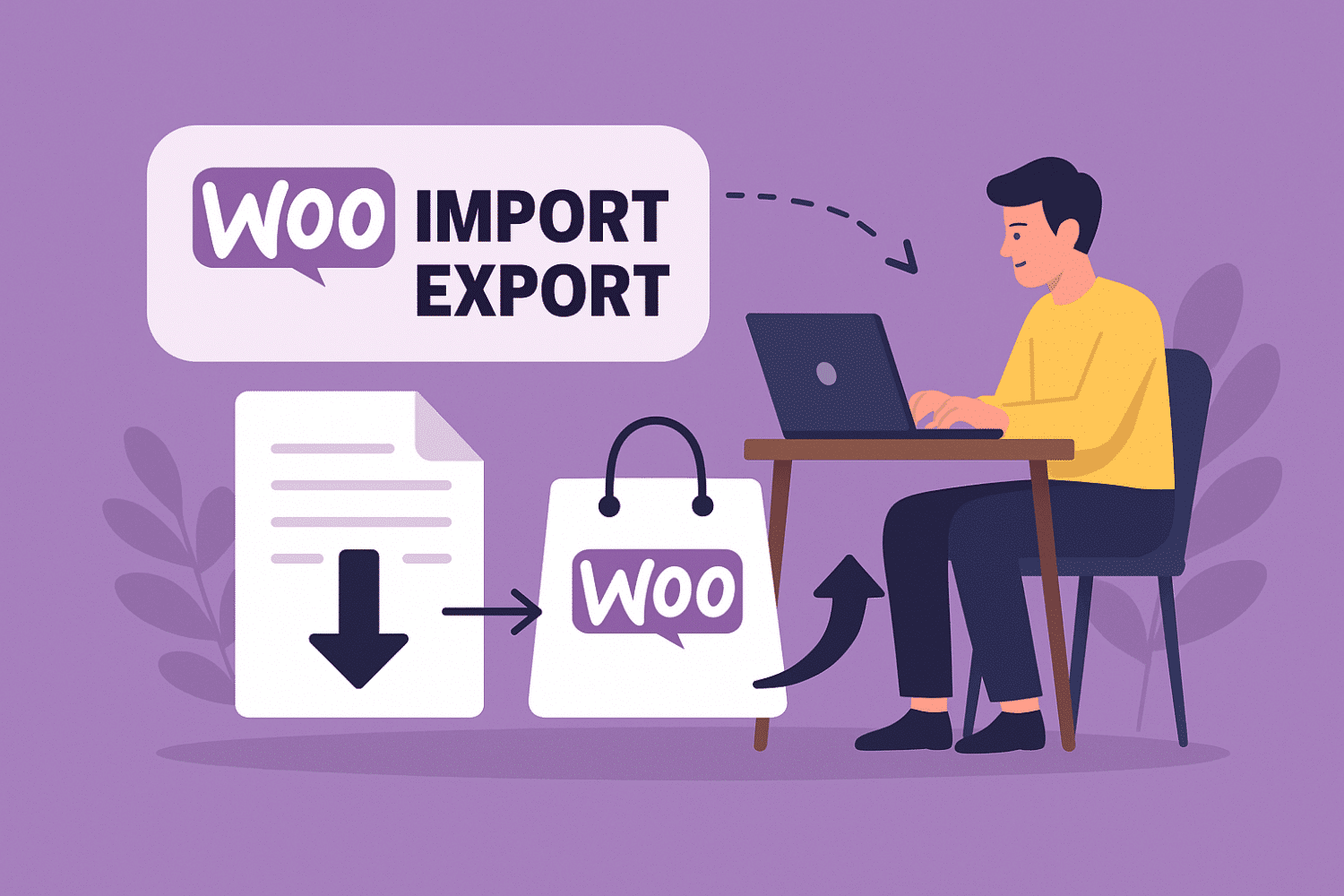
Import and Export in WooCommerce
Understanding Import and Export in WooCommerce
WooCommerce is one of the most popular plugins for WordPress, offering powerful features that enable online retailers to efficiently manage e-commerce operations. Among the core functionalities of this system are the import and export capabilities, which are essential processes for any store running on WooCommerce. These features allow store owners to transfer vital information, such as products, customers, and orders, between different systems or files, making the ongoing updating and maintenance of online inventory much easier.

The importance of import and export in WooCommerce cannot be overstated. In the world of e-commerce, the ability to manage large datasets efficiently can be the determining factor between success and failure. By using the import feature, merchants can easily add large quantities of new products, simplifying the product entry process. On the other hand, the export feature allows businesses to extract their data for various purposes, such as analysis, compliance, or archiving.
E-commerce merchants often need to import or export data in several common scenarios, such as platform migration (when transferring complete data from one system to another without data loss), bulk editing (e.g., modifying prices, descriptions, or attributes for a large number of products at once), or regular data backups, which are crucial for ensuring the security and integrity of store information. These backups can be easily performed using the export tool in WooCommerce to ensure a reliable copy of sensitive data is always available.
In summary, understanding the import and export capabilities in WooCommerce is essential for any online merchant looking to enhance store efficiency and ensure smooth daily operations. By leveraging these tools, administrative processes can be streamlined, data integrity maintained, and customer experience improved.
Tools and Plugins for Import and Export in WooCommerce
When managing an online store using WooCommerce, the ability to import and export efficiently is crucial for optimizing workflows. Fortunately, WooCommerce provides built-in tools as well as a wide range of third-party plugins to facilitate these processes. Each option has its advantages and disadvantages, so it’s important to understand their functionality.
The default import and export functions in WooCommerce allow users to work with simple CSV files containing product, category, order, and customer data. This tool is easy to use and can be accessed directly from the admin panel, but it suits only basic needs. It might not be effective when dealing with complex data structures or large datasets, and users may face limitations in the number of fields available for mapping, which could hinder the process of importing or exporting product information in full.
If you need more advanced capabilities, plugins like WP All Import and WooCommerce CSV Import Suite are popular choices in the WooCommerce community. WP All Import is known for its high flexibility, supporting the import of products from multiple XML and CSV files, allowing users to customize the import process in great detail. It also supports custom fields and custom post types, making it ideal for complex e-commerce stores. However, some users might find it challenging to use at first due to its wide range of features.
On the other hand, the WooCommerce CSV Import Suite offers a simpler experience for importing and exporting data in CSV format, but it includes advanced features such as bulk processing and good handling of variable products. Its downside is that it’s a paid plugin, which could require additional financial investment.
Ultimately, the right tool or plugin should be chosen based on your business requirements, store size, and the complexity of your product data. Evaluating the pros and cons of each option can help you make an informed decision that enhances your operational efficiency.
Step-by-Step Guide for Importing and Exporting Products in WooCommerce
Importing and exporting products in WooCommerce is a valuable process that enhances e-commerce efficiency by allowing store owners to manage inventory quickly. To get started, you need to prepare a correctly formatted CSV file, as this format is the one supported by WooCommerce.
The first step is to create a CSV file containing the product details you wish to import. You can use programs like Microsoft Excel or Google Sheets to prepare this file. It should include essential columns such as: product name, SKU, price, and available quantity. Make sure the column headers match what WooCommerce requires to avoid errors during the import process.
Once the CSV file is prepared, go to the import tool in WooCommerce. From the WordPress dashboard, navigate to the Products section, then select Import and upload the file. You will then be prompted to map the columns in your file with the corresponding fields in WooCommerce, which is crucial for accurate data entry into the store.
Exporting products is just as simple. Go to the Products section, select Export, choose the data you want to extract, and then download the resulting CSV file. This file can be edited or shared as needed.
During these processes, it’s advised to avoid common mistakes, such as using unsupported file formats or failing to create a backup of the current data before the import process. By following these steps and adopting best practices for data management, users can execute imports and exports efficiently, enhancing overall store performance.
Exploring and Solving Common Import and Export Issues
Users may encounter several challenges when managing a WooCommerce store during the import and export of data. Understanding common issues, their causes, and effective solutions can significantly improve performance.
One of the common problems is data loss, which often occurs when the import files are set up incorrectly. It’s important to ensure that all necessary fields are included and properly formatted to avoid gaps in product or customer data. Using a comprehensive data template can reduce the likelihood of this issue.
Formatting errors are another common obstacle in the import and export processes. These errors can occur due to mismatched delimiters or incompatible encodings with WooCommerce. To avoid these issues, ensure the file is saved in UTF-8 encoded CSV format. Checking the file for correctness before starting the import process can save a lot of time and effort later.
Compatibility issues can also arise, especially when using plugins or extensions that modify the core functionality of WooCommerce. It’s important to ensure that any external tool or plugin used is compatible with the current version of WooCommerce. Regularly updating WooCommerce and all plugins helps minimize these conflicts.
To ensure data integrity after the import or export process, it’s essential to perform a thorough review. Checking customer data, product variety, and stock levels can uncover discrepancies caused by the process. Using a staging environment for large operations is a safe option before applying them on the live site.
By paying attention to these details and following a precise, methodical approach, users can overcome common issues and make full use of the import and export capabilities in WooCommerce with confidence and ease.






No comment