






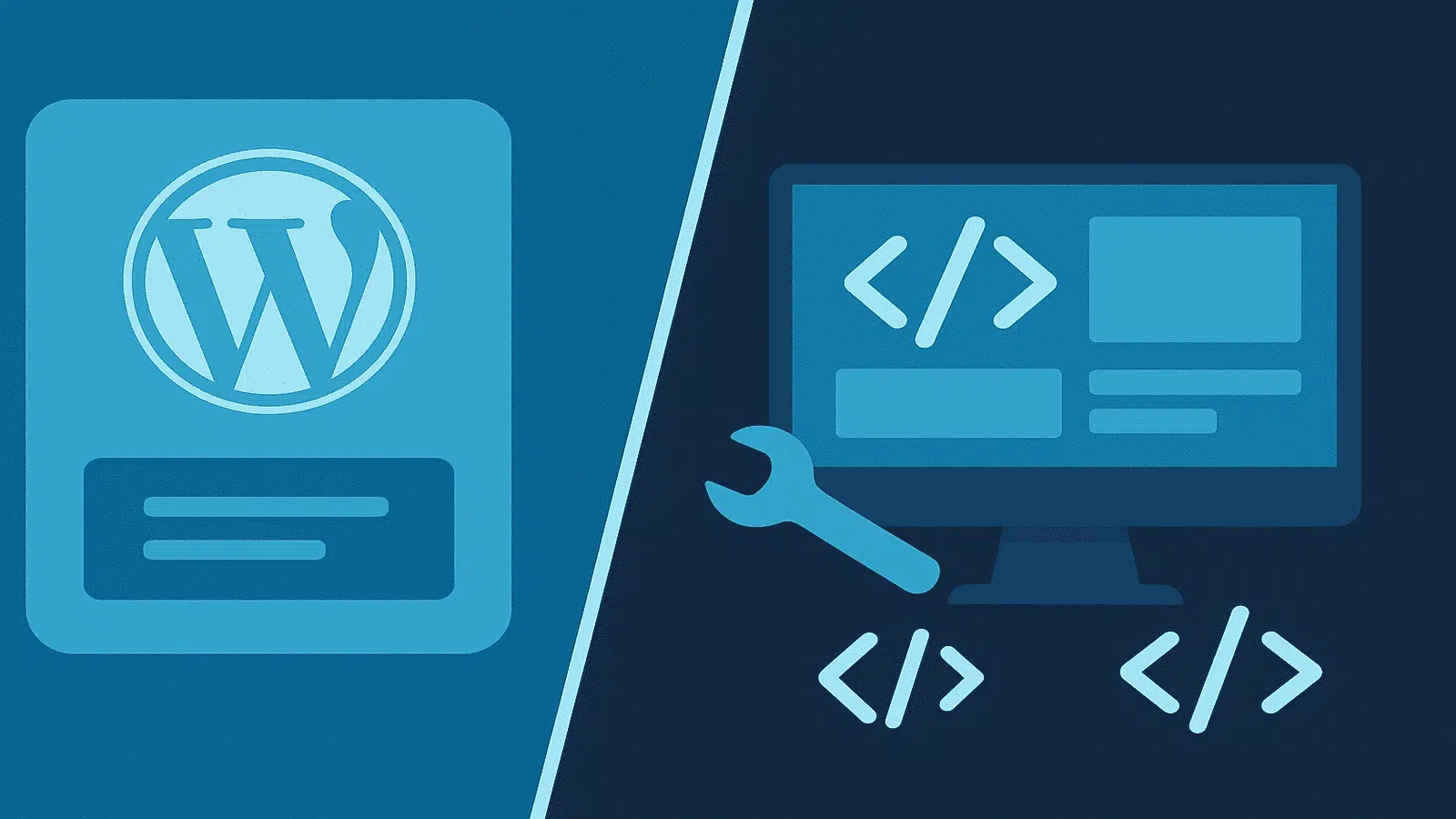
WordPress vs. Custom Development
Which Is Best for Your Website?
Introduction
Choosing a content management system (CMS) or opting for fully custom website development is a complex decision that requires careful thought from business owners. These options are a core part of your digital marketing strategy and aim to achieve business goals efficiently. In this context, WordPress is one of the most popular and widely used CMSs worldwide, while custom development reflects a bespoke approach that demands more resources but offers great flexibility.
WordPress stands out for its user-friendly interface, allowing anyone with basic IT knowledge to create a site and publish content without needing programming expertise. A wide range of themes and plugins helps users tailor their sites to their specific needs.

On the other hand, custom development means building a tailored site that meets particular requirements, giving companies greater control over design and development. However, this route typically requires a larger investment of time and budget.
The key is understanding your project’s requirements and objectives. The convenience and ease of WordPress may be ideal for small businesses or startups, while larger companies might need deeper customization and advanced functionality that WordPress cannot cover effectively. A well-informed decision depends on a thorough assessment of your project’s nature, budget, and technical needs.
WordPress
WordPress is one of the world’s most popular and widely used content management systems. Launched in 2003, it has become a go-to choice for building and scaling websites—from personal blogs to large business sites and online stores. Its success is attributed to a set of features that make it both easy to use and highly flexible.
A major advantage is its intuitive interface, enabling even non-technical users to create and edit content with ease. Similarly, WordPress offers a wide selection of themes and designs that let you customize your site to match your brand or message. In addition, its plugin ecosystem lets you extend functionality as needed without writing any code.
WordPress’s popularity goes beyond usability: it powers more than 40% of all websites on the internet, making it a trusted, recognized platform. This broad adoption also means a large community of developers and users, making it easier to find help and support when needed. Many businesses and individuals choose it because setup and maintenance costs are lower than custom development. These advantages make WordPress attractive to project owners who want to launch quickly and effectively.
Custom Development: Concept and Benefits
Custom development is a technical approach for creating applications or websites using bespoke programming tailored to specific needs. Unlike CMSs like WordPress, which provide ready-made templates and tools, custom software allows developers to write unique code that precisely fits the client’s requirements and the application’s exact use case. Interfaces and functions can be designed to match individual business needs, delivering a direct response to changing operations.
One of the standout benefits is complete flexibility. Rather than relying on limited templates, developers can build unique features and custom workflows. This is especially valuable for companies that need capabilities not available in general-purpose systems. For example, if you require integrations with specific systems or complex workflow management, custom development is often the optimal choice because it can adapt to your existing environment.
Custom builds can also offer stronger security compared to general systems. Purpose-built software can reduce common vulnerabilities associated with open-source platforms like WordPress. Enhanced security measures can be embedded, making sites or apps less susceptible to cyberattacks.
Overall, custom development is a compelling option when you need a purpose-built website, offering unique features and flexibility beyond what mainstream CMSs provide.
Ease of Use
Ease of use is a core factor when selecting how to build a website. WordPress is popular among beginners thanks to its straightforward interface. Its flexible dashboard lets even non-technical users create and edit content easily. Pages, posts, and images can be added with a few clicks, making site building and updates efficient and fast.
Custom development, by contrast, is more complex. Building sites from scratch requires time to work with languages like HTML, CSS, and JavaScript. Although it delivers complete control over design and functionality, that flexibility comes with learning and execution challenges. For beginners, custom development can be demanding and may create barriers for owners who want to launch quickly.
Furthermore, WordPress offers a vast library of plugins and themes that let beginners tailor their sites without advanced coding knowledge, accelerating results. Deep customization in custom development, however, requires a higher skill level. For non-technical users, WordPress is generally the easier path to a functional, attractive site.
Costs
Website costs vary based on whether you choose WordPress or custom development. With WordPress, several budget factors come into play. Typically, you’ll pay for hosting, which can range from $5 to $30 per month depending on the provider and desired performance/support levels. You’ll also consider theme costs, which range from free to $100+ for premium options. Plugins may add further expenses—anywhere from $10 to $500 or more—depending on the features you need.
Custom development requires a larger investment, as you’ll hire a developer or agency. Hourly rates vary widely by expertise and location, often from $25 to $150 per hour. A bespoke site may take weeks to months depending on complexity and scope, leading to total costs that can reach several thousand dollars. Ongoing maintenance and updates should also be budgeted, adding to long-term costs.
When deciding, evaluate your budget carefully and think about future needs to ensure your choice aligns with financial expectations and your development roadmap.
Performance and Scalability
Performance and scalability are critical when choosing between WordPress and custom development. Each option has strengths and trade-offs that affect speed and the ability to handle traffic growth.
WordPress offers great customization and a broad plugin ecosystem. However, performance depends heavily on plugin quality and hosting. Poorly optimized add-ons or inadequate hosting can slow the site and reduce efficiency. WordPress is designed to scale smoothly and can accommodate large volumes of content, but maintaining stable performance under heavy traffic—especially during peaks—requires careful optimization.
Custom development has clear performance advantages. Developers can fine-tune code to match your exact requirements, improving speed and strengthening security. A tailored architecture can adapt seamlessly to business needs, enabling growth without compromising performance. That said, building and evolving a custom system demands more time and budget, and may require periodic reassessment as visitor volumes or requirements change.
Ultimately, the right choice depends on your site’s specific needs. If speed and security are top priorities, weigh each option’s pros and cons against your future goals and scaling plans.

Storage and Content
When comparing WordPress and custom development, content management is a major consideration. Each approach handles data storage and organization differently, which affects day-to-day management.
WordPress is a complete CMS built on a MySQL database for storing text, images, and videos. A graphical interface lets users manage content easily, making updates and additions straightforward. Numerous plugins help organize content and improve presentation. Categories, tags, and static pages allow effective structure, enabling rich, varied content aligned with your needs.
Custom development offers greater freedom to design the database and content model to your exact specifications. Developers can tailor schemas to reflect your desired structure and facilitate image/video handling without generic constraints. However, this path requires advanced skills and experience to ensure efficient content management.
The best choice depends on site size and complexity, plus business requirements. WordPress provides a quick, easy solution through its simple interface, while custom development creates a more specialized experience for specific needs. Understanding how storage choices affect content management is essential to making the right decision.
Support and Updates
Support and updates are essential factors in choosing a CMS. WordPress benefits from a vast community of users and developers, with thousands of themes and plugins. This ecosystem can help you solve many problems through forums and specialized sites. Regular updates improve security and performance, fix bugs, and introduce new features. Relying on WordPress means access to ongoing improvements without always needing a dedicated developer on retainer.
Custom development requires greater investment of people and budget. Support and updates are more complex, typically depending on contracts with the developers or agencies that built the site. If changes are needed—especially for security or feature enhancements—they may take time and incur additional costs. Support can be more limited, and you won’t receive instant, platform-wide updates like WordPress provides.
In short, the availability of support and updates for each option is a decisive factor. Align your choice with both current and future business needs.
Conclusion: Which Is Right for You?
When deciding between WordPress and custom development, consider several factors tied to your needs and goals. Both have advantages and drawbacks, so evaluate each in the context of your specific project.
WordPress’s standout benefits are ease of use and speed to launch. A wide range of themes and plugins lets you design an appealing site without advanced coding skills, making it ideal for beginners or anyone who needs to go live quickly. An active support community also makes troubleshooting easier.
Custom development offers greater flexibility to craft a unique experience you can’t easily achieve with off-the-shelf platforms. If your project requires specialized features WordPress doesn’t provide, custom may be the better path. Be prepared, however, to invest more time and resources in building and maintaining it.
Ultimately, the best choice depends on your objectives, budget, and technical capacity. If you want a fast, cost-effective solution, WordPress is an excellent option. If you aim for an innovative site that expresses a distinct identity, investing in custom development can be worthwhile. Assess your options carefully and choose what aligns with your long-term vision.


No comment